
Phil Enock, PhD SEP
Somatic Experiencing Practitioner
If you're seeking somatic coaching or somatic therapy, most likely you are experiencing emotional pain. You may be in a struggle. I’d like to help.I am a Somatic Experiencing Practitioner, educated at Harvard and trained in somatic mindfulness practices.I offer remote sessions on Zoom to help people with the deep emotional pain of being human, with experiences like intense fear and worrying, crippling feelings of worthlessness, and relational trauma. I help people get out of their heads and into their bodies.I also welcome people who are questioning psychiatry or tapering down psychiatric drugs.Contact me or schedule a free 30-minute consultation.I warmly welcome all adults (18+) interested in somatic work to inquire.
About Me
My approach is grounded in Somatic Experiencing while being informed by my PhD from Harvard in experimental clinical psychology, training in Circling and the Alexander Technique, and perspectives from Acceptance and Commitment Therapy (ACT) and the Inner Compass Initiative.My approach is body-based, experiential, and skills-based (and not psychoanalytic or cognitive-behavioral).I work as a somatic coach, sometimes called a somatic therapist, somatic mindfulness coach, or somatic practitioner.I coach people in deepening their somatic mindfulness skills for a more manageable inner world and a more thriving life.I relate with any client as a fellow human, as I am someone with lived experience of navigating psychiatric treatment and a lot of therapy. We can walk together.
(Please note that from a legal/regulatory standpoint, I am not licensed, am not a psychotherapist and am not technically offering psychotherapy or treatment of any specific mental health disorders. What I do have is 5000+ hours of training over 10 years relevant to supporting you to heal and grow.)
Somatic Mindfulness Coaching
Somatic coaching builds a new skill set centered around feeling the body and noticing the present moment. These embodiment and mindfulness skills improve one's ability to regulate oneself and meet life’s challenges including mental health, stress, and relationships.

Like traditional talk therapy, somatic coaching involves talking 1-on-1 in weekly sessions. The difference is that we bring deeper awareness to the body and enable the processing of emotions and traumas (both great and small).Our goal is that with your enhanced mind-body abilities, you will be able to self-regulate and process your issues long after you have completed coaching with me.I do integrate other practices, but we'll be on the same page that somatic coaching (mostly Somatic Experiencing) or somatic skills coaching is the main focus of our time together.A 55-min somatic coaching session on Zoom costs $250. (Discounts are possible as of June 2026, but I can only guarantee a discount for a short time until session demand gets too high, whereas at the full rate I can hold the rate for a long time.)
Somatic Coaching FAQ

All sessions are via video call (Zoom).
Yes, somatic coaching is still for you. In fact, I specialize in people who are strong analytical thinkers like me.If you worry that you can't currently feel your body sensations very much, you're not alone. I started that way too, living up in my head.The reason why somatic coaching can work so well for Thinkers is that it creates fresh, complementary skills to add to your robust intellectual skills. It isn't based on analysis or logic.The process is about mindfully honing your emotional antennae to tune into what's going on inside you. Then, your emotions can process through your body on a feeling and sensation level, a "felt sense", and not through more verbal analysis and explanation.For more info, see the Thinkers page of my website.
Well, me too. And working with other highly sensitive people (HSPs) is a specialty of mine.If this is a new idea to you: Don't worry, it's not another diagnosis, just a common trait that may illuminate some things if it fits you.For more info, see the Highly Sensitive People page of my website.


Contact
Schedule a free 30-minute consultation to explore somatic coaching together.
I'm also happy to hear from anyone questioning or moving away from psychiatry (no coaching interest needed). Reach out and I'll share resources and support.
Contact me below, directly schedule a free 30-minute Zoom above, or send an email to [email protected].
For Thinkers
I specialize in working with people with strong analytical minds. Let's chat.If you're such a thinker, my simple sales pitch is:
I can help you because I'm like you.
Who you are:
I think I know where you’re coming from.I imagine you're intelligent. Your mind moves fast.You may give organized, in-depth explanations in everyday conversations.You look for intellectual challenges. You might work or study in tech, engineering, science or academia.You may insist on correctness, notice details, and easily generate solutions to problems.You might be into rationalism (see e.g., LessWrong or the Scout Mindset).You don’t want to waste time in therapy, and you won’t try just any approach that someone claims is helpful. With a healthy skepticism, you see through pseudoscience.Do you want a coach capable of meeting you at the speed and sophistication of your mind?
I can meet you there.
Who I am:
Before my arriving at embodied mindfulness practices, I was a Thinker and a Thinker alone. I pursued career fields and jobs where a strong analytical mind was the essential ingredient. For 6 years, I was a quantitative researcher completing my PhD at Harvard in the science of experimental clinical psychology, then later a data scientist and a backend software engineer.I had mental health problems of depression and anxiety that weren't getting better despite many treatments. I eventually realized that a lot of intense emotions, triggers and reactions were hidden from me, buried under numbness and overthinking. The key causal factors of my problems were outside of my awareness.And, in fact, the technical diagnoses of things like Major Depressive Disorder or Anxiety Disorder, and studying empirical data about psychiatric treatment outcomes, had given me a false sense of having sufficient understanding. In my ignorance of what was really going on in my emotional system and how to make progress, I felt hopeless for years.I finally found that my body was the key. I needed to deeply get in touch with what was happening in my body to get better. I began the personal journey from existing as a detached mind unaware of the body and my emotions to becoming a connected whole self with mind and body working together. Mindfulness practices, including one of authentically relating to others through embodied presence also brought me into deeper connection with everyone around me.
Somatic coaching for thinkers:
What I'm suggesting is not that you need to do what I did, and I certainly don't think it takes long in somatic coaching to see a noticeable benefit in your mental health, well-being, and emotional processing. But I am saying my experience has equipped me to help you, whether in the short-term with a small number of sessions or in longer term work.The reason why somatic coaching can work so well for Thinkers is that it creates fresh skills. It isn't based on the analysis and logic that are already strong--and possibly overactive--for you.The process is about mindfully honing your emotional antennae to tune into what's going on inside you. Then, your emotions can process through your body on a feeling and sensation level, a "felt sense", and not through more verbal analysis and explanation.Contact me or schedule a free 20-minute consultation.→ back to main page
For Highly Sensitive People (HSPs)
Working with other highly sensitive people (HSPs) is a specialty of mine. Because I'm one too.If this is a new idea to you: Don't worry, it's not another diagnosis, just a common trait that may illuminate some things if it fits you.The concept of the HSP is not widely known. It was first described in The Highly Sensitive Person by Elaine Aron.The greater "sensitivity" mostly consists of having more intense emotions, being sensitive and empathic to other people, highly affected by one's environment, and more alert when new situations remind you of old situations (including traumatic ones).It's common. It's not a disorder, it's a personality trait with these characteristics:
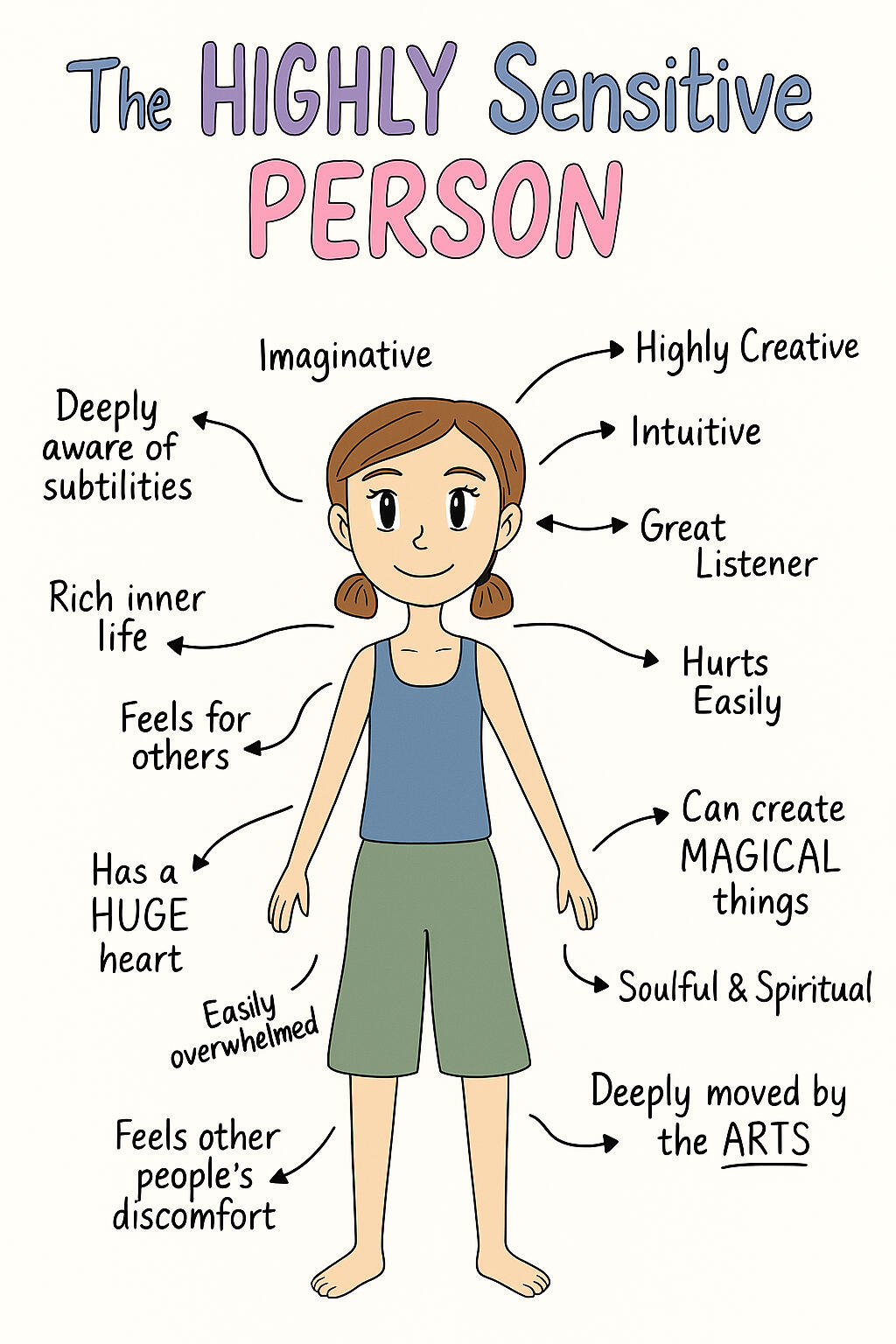
I find it more interesting and empowering to discuss and identify with being an HSP than about mental health diagnoses of "anxiety disorders" or "major depressive disorder" for example.For more info, see this summary article, this personal story, or this more in-depth article.There's a self-test, identical to the research-tested HSP-R scale. My score is a 6.Contact me or schedule a free 30-minute consultation about somatic coaching for highly sensitive people.→ back to main page
SE Training Resources from Phil
(Dear SE trainees, I offer SE-based sessions on Zoom and would love to receive SE referrals.)
Reference gdocs by Phil
Info on Acceptance and Commitment Therapy (ACT), which I suggest tapping into as a framework of core processes and scientific support for why SE works. Feel free to ask me about how ACT research validates SE (and encourage me to write about it).
SE group consultations
Abi Blakeslee: Group Consultations -- highest possible recommendation!
Dave Berger group consultations - 1 Saturday a month, 9-10:30a ET, very information dense
Amy Shoko Brown: SE Group Case Consultations 6-session series
Shanly Weber: Group & Individual Somatic Experiencing Consultations
Shideh Lennon: Workshops & Events -- no group consultations on schedule as of 2025-07-27, but let's check back later
Other SE workshops, demos
Abi Blakeslee: Live SE Demonstration Workshops -- unique and phenomenal, my highest possible recommendation!
Ergos Institute (Peter Levine's organization): SE master classes
Peter Levine: workshop at THE EMBODY LAB (one date in Nov 2025 only)
Links up to date as of August 2025→ go to main page of this website